Hiking in the Oberpinzgau: my honest favourite trails around the Krimml Waterfalls
I have lived here for years, at the western edge of the Salzburg region, where the High Tauern make the sky look smaller. "Oberpinzgau" means nothing to most guests beforehand — and that is exactly the beauty of it. Six villages line up here, all on the edge of the largest national park in the Alps, and between them lie hiking trails for genuinely every level of fitness: from the pram-friendly lakeside loop to the glaciated three-thousander. In this post I share the tours I genuinely recommend to guests — with the honest notes you won't find in any glossy brochure.
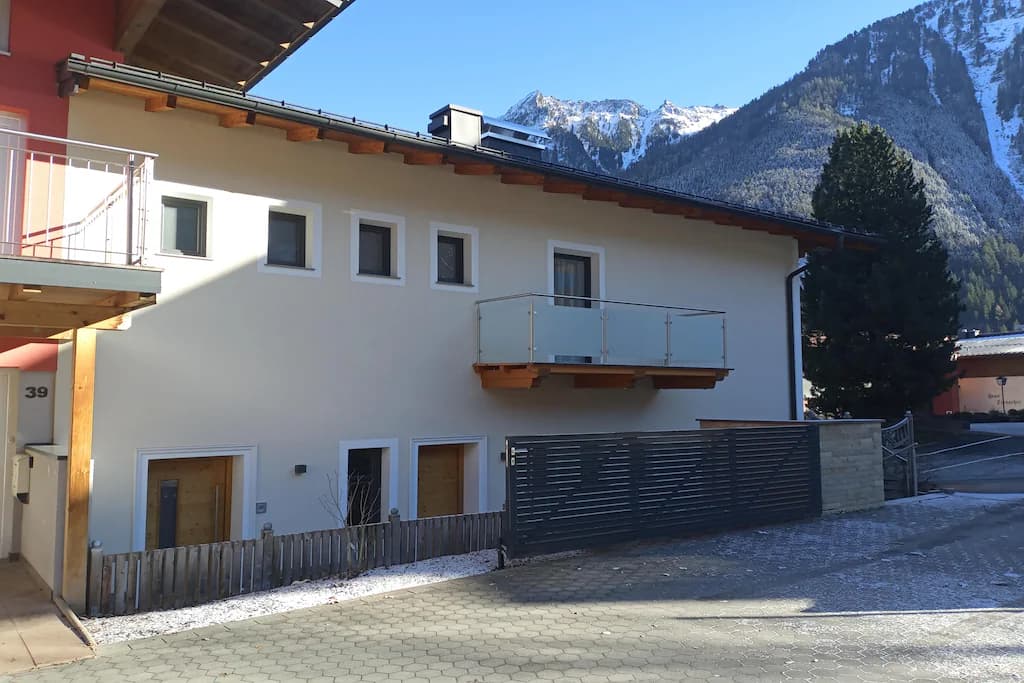
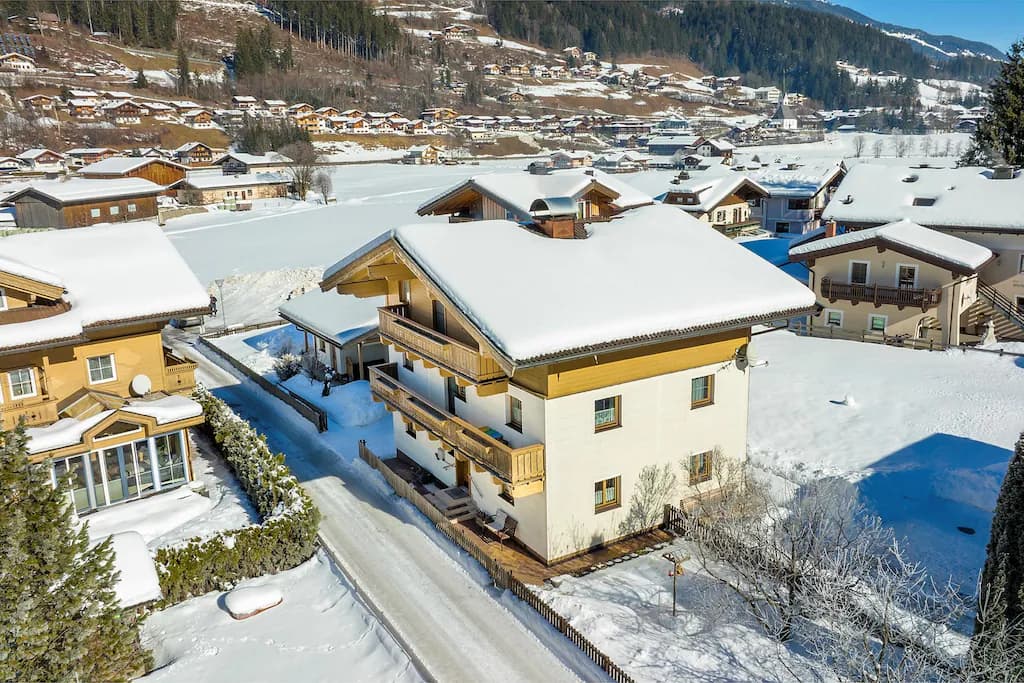
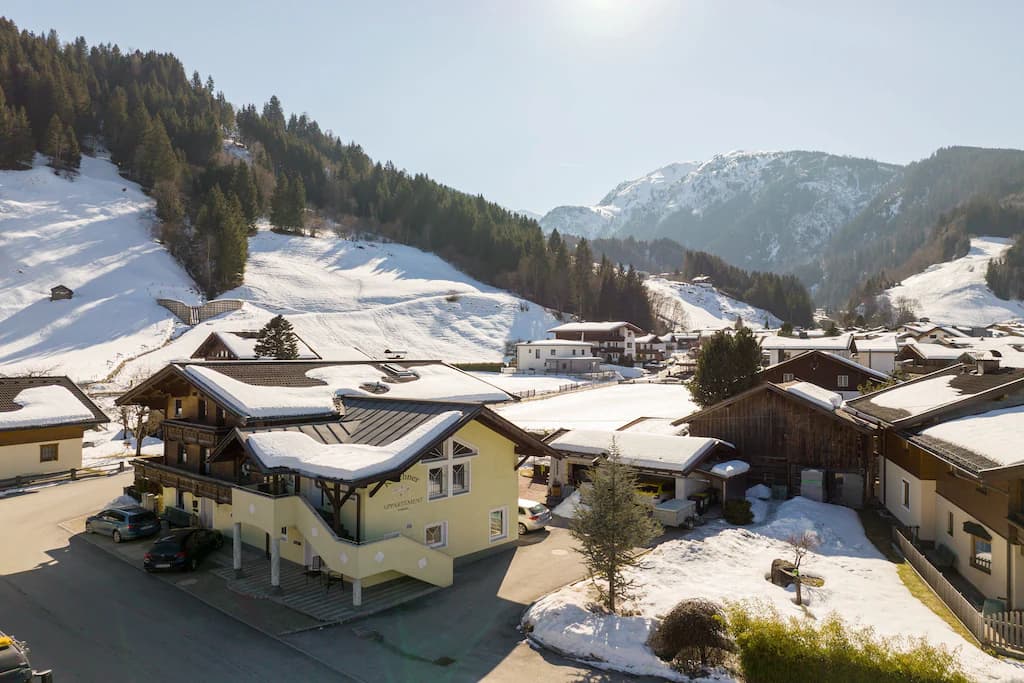
Where I'd stay myself
Selected holiday homes that fit this article. You can check availability and prices right here with us.
We arrange these properties on behalf of the holiday home provider Belvilla, your contractual partner for the accommodation.
Why the region is (almost too) good for hiking
Krimml, Wald, Neukirchen, Bramberg, Hollersbach and Mittersill are strung like pearls along the upper Salzach valley — and all border the Hohe Tauern National Park, at 185,600 hectares the largest protected area in the Alps. That means marmots and ibex, thundering waterfalls, emeralds in the mountain and peaks beyond 3,000 metres — and yet never the crowds of some Tyrolean hotspots. Anyone who takes a holiday apartment in the region as a base has all of this within a 20-minute drive.
The Krimml Waterfalls — and my honest anti-tip
You have to have seen them. The Krimml Waterfalls, with a drop of 380 metres, are the highest in Austria and the largest in Europe — three tiers down which the Krimml Ache thunders into the valley. Access to the Kürsingerplatz at the lowest tier is barrier-free — so it works with a pram too, and the spectacle is already overwhelming from there.
If you want to hike all the way up the falls (a good 4 kilometres and around 380 metres of ascent, roughly two and a half hours there and back), you have two options: the well-known Panorama Trail with its viewing galleries — spectacular, but busy in high summer — or, my personal favourite for quieter hours, the old Tauern path to the left of the falls: the same force of water, half as many people. Both lead up to the Gasthaus Schönangerl at 1,306 metres and on to the upper basin by the first fall.
My seasonal tip: in June, when the snowmelt feeds the Ache, the falls carry the most water — that's when they crash into the valley most powerfully. It is the most impressive moment of the year.
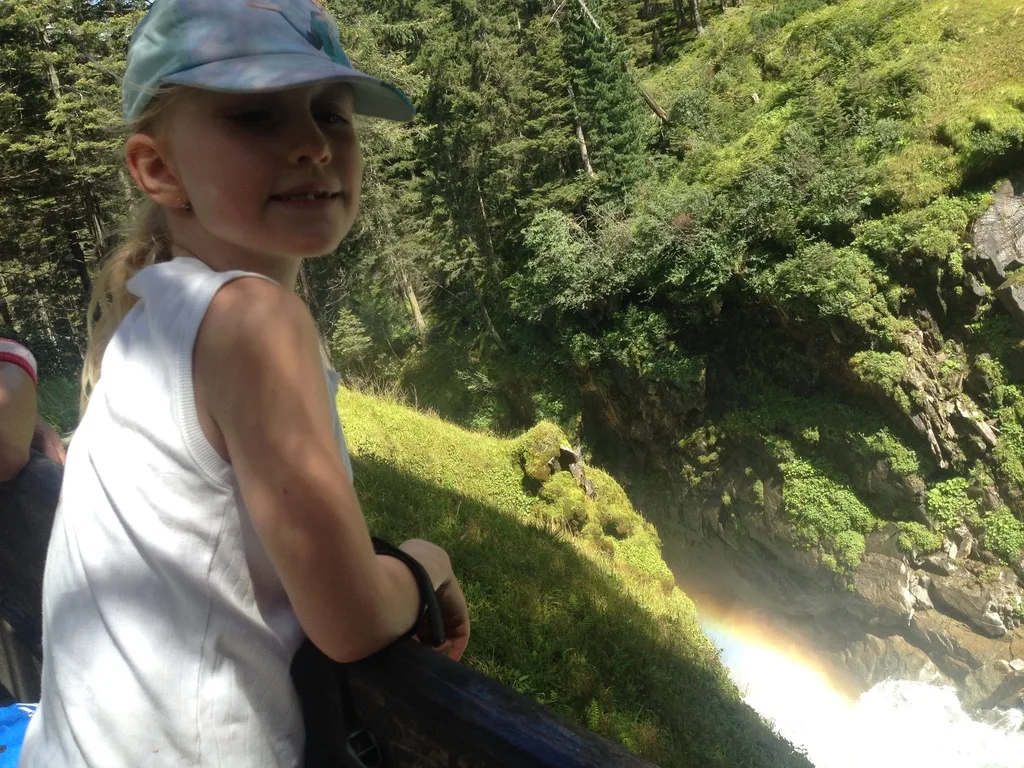
And since I'm talking about "right up close": there's a story to tell. My son Tobias loves to stand almost right at the front by the rocks — there you feel the spray on your face and only then realise how close you are to this force of nature; on hot days it's the best refreshment there is. One thing first, very important: nobody should really go right to the front edge — the water has enormous power, and the wet rocks there are mirror-slick. Once Tobias slipped a little too far forward and pulled off a perfect pirouette — we had a huge fright. Luckily nothing happened (and with the waterfall and a rainbow in the background it even looked rather stylish). Ever since, we follow one simple rule: sturdy footwear, a step or two back from the edge, and always an eye on the children. That way this spot stays exactly what it should be — a moment you never forget.
Easy & family-friendly: the trails with children
When the children come along, these are my safe bets:
Slide Trail on the Wildkogel (Neukirchen): My family favourite, because hiking and action come together. Up by gondola, then along the Panorama Trail in about an hour to the mid-station — with views of the three-thousanders of the High Tauern. From there the Slide Trail leads down: ten stainless-steel slides between 22 and 53 metres, one even with a free-fall effect. Up by cable car, down in a mix of walking and sliding — it thrills young and old alike. From the end point at Gasthof Stockenbaum it's another 45 minutes on foot into the valley. (From age 6 / 130 cm; the slides are free with the cable-car ticket.)
Herb Trail & Bee Trail (Hollersbach): Over 500 plants grow in the Hollersbach herb garden, and the bee trail explains the world of honey and wild bees at 22 stations. "Grasping nature" in the literal sense — children love it, and it works even in mixed weather.
Stream Trail into the Hollersbach valley to the Senninger Alm: A themed trail awarded the Austrian Hiking Seal of Quality, running alongside the rushing stream, around 11.6 kilometres and 450 metres of ascent up to the Senninger Alm at 1,132 metres — with a cosy stop for refreshments and, conveniently, walkable on uncertain days too.
For the very little ones, for whom the Slide Trail is still too wild (it starts at age six), there is also the flat, pram-friendly lakes loop around two reservoirs up at the Wildkogel summit station — just under three kilometres in three quarters of an hour, with panoramic views to the Großvenediger and a stop at the Wildkogel-Alm.
Finkau & Durlassboden: my toll-free secret outing
Most people drive over the Gerlos Pass and pay the toll. What hardly any guest knows: from Wald towards Königsleiten you can drive up toll-free via the old pass road. At the top lie the Durlassboden reservoir and the Gasthof Finkau — with a children's playground, lake, petting zoo and ice-cream sundaes, all easily reachable by car. There are short, easy walks around the lake. For a relaxed family day with a six-year-old, that beats any ambitious tour — and the Finkau car park is at the same time the starting point for my favourite hut, more on that in a moment.
If you'd rather take the Gerlos Alpine Road — the panoramic toll road — it costs €15 per car in summer (€12 for EVs), and you don't need a motorway vignette for it. In winter it is only toll-free with a valid Zillertal Arena ski pass — otherwise you pay even then. And if you want to reach the Großglockner from the south: the High Alpine Road is a separate scenic toll road (around €46.50 for a day ticket, a bit cheaper online) — not a must for hiking in our area.
My two favourite huts
Two huts are what the Oberpinzgau is all about for me:
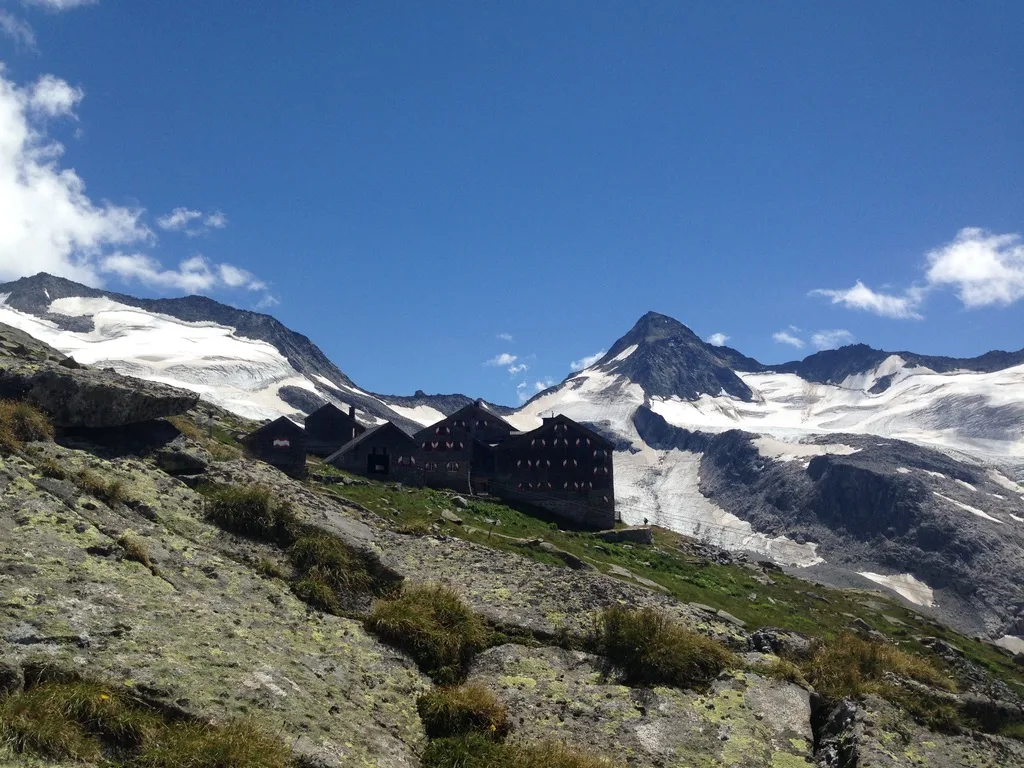
The Zittauerhütte on the Wildgerlossee. The path from the Alpengasthof Finkau, at 14 kilometres and over 900 metres of ascent, is no stroll — demanding, but every step is worth it. At the top you sit by the mountain lake, with the three-thousanders Gabler and Dreiherrnspitze in front of you. This is the high mountains as you dream of them: still, vast, and in the afternoon the peaks mirror in the lake.
The Gletscherblickalm on the Plattenkogel. Run by Erich and Gabi, with their own dairy, own beer and a petting zoo for the children — and, as the name gives away, with a view of the glaciers of the Wildgerlos valley. The cheese comes from the hut kitchen, the beer from their own brew, and the children disappear off to the petting zoo while the parents enjoy the view. I come here in my own time, too.
In general, stopping in for a bite is part of hiking for me — a hike in the Oberpinzgau is only half as nice if you don't at some point sit on an alpine bench with steaming Kaiserschmarrn or a hearty snack, take off your boots and watch the mountains stand still. Whether Schönangerl by the waterfall, Senninger Alm in the Hollersbach valley or the alpine huts in the Habach valley: the hut hosts here still cook themselves, and you can taste it.
For the experienced: Kürsingerhütte, via ferrata & Großvenediger
If you want to go higher, climb from Neukirchen up the Obersulzbach valley to the Kürsingerhütte — 6.5 kilometres, 570 metres of ascent, starting from the Hopffeldboden car park (small daily fee). Sure-footedness is a prerequisite here. If you're after a thrill, take the via ferrata to the hut instead of the normal route — but only if you have a head for heights, are sure-footed and roped up. This is no casual fun but a genuine alpine undertaking.
And right at the top reigns the Großvenediger at 3,657 metres, the highest mountain in Salzburg. As a ski tour in May it's a dream — but this is high-alpine, glaciated terrain, and a mountain guide belongs here, no ifs or buts. As a rule for the high tours: June can still be too early up top, because snow lies well into early summer.
Emeralds, a waterfall and a quiet mountain lake
Three more tours I warmly recommend to guests:
Emerald Trail in the Habach valley (Bramberg): An easy valley path into Europe's only emerald deposit. At the digging sites children may search for the green stones themselves; along the way the Enzianhütte, Alpenrose and Moa-Alm tempt you to rest. It's staffed roughly from mid-June to September.
Untersulzbach Waterfall (Neukirchen): An 80-metre-plunging natural monument — as a short family loop from Gasthof Schütthof, or further up the valley to the Hochfeld show mine, an old copper mine.
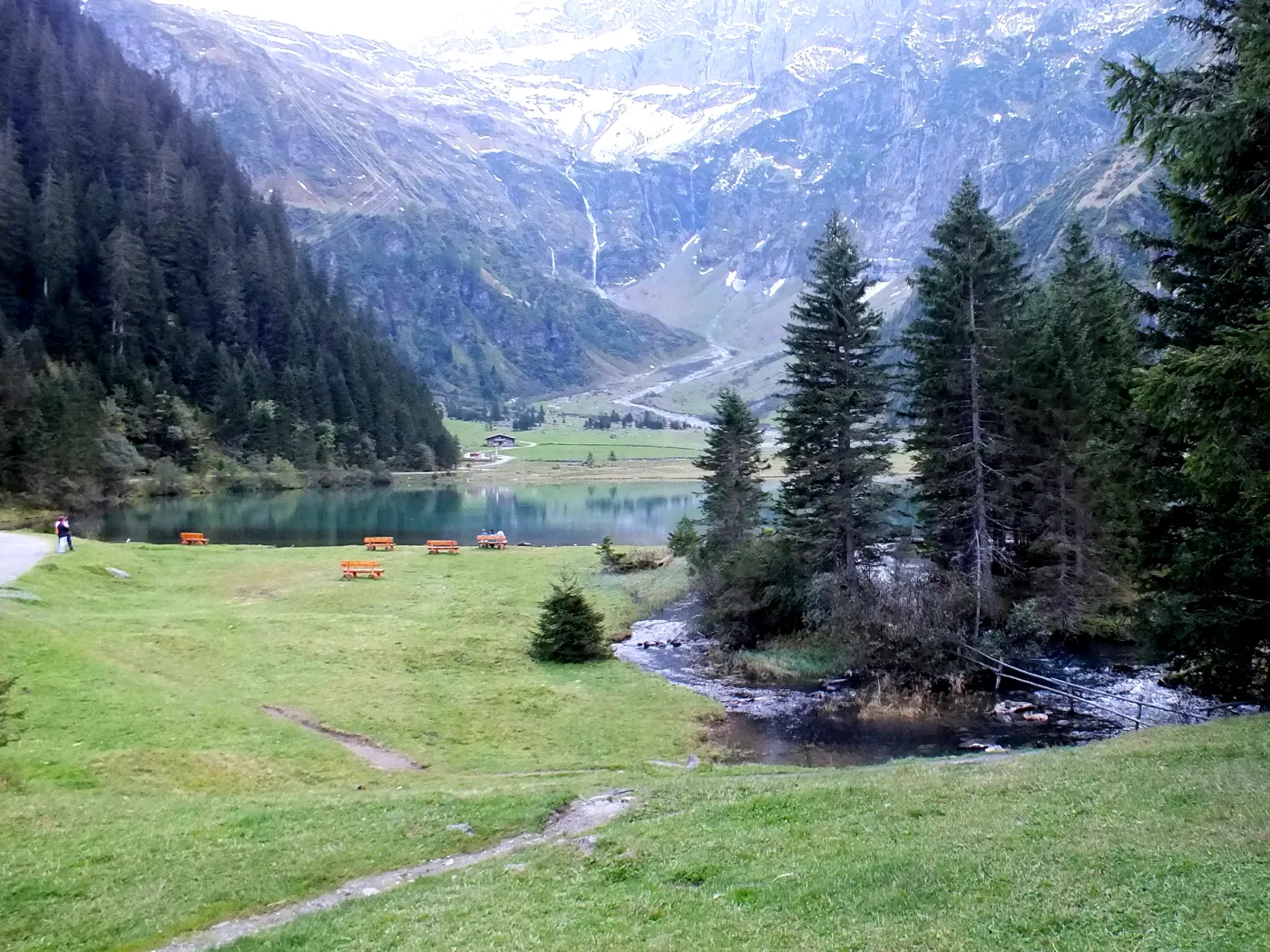
Hintersee in the Felber valley (Mittersill): A mountain lake at 1,313 metres, formed in 1495 by a rockslide. The nature trail with ten boards circles it on a flat path — ideal for a quiet afternoon when your legs are still tired from the day before.
Photo: Klaus Germann / Wikimedia Commons, CC BY-SA 3.0
Spotting wildlife: where the marmots whistle
I hear that question often. My honest answer: you'll almost certainly see marmots on the way to the Kürsingerhütte — they whistle shrilly when you get too close and vanish into their burrow in a flash. If you prefer it more comfortable, take a day trip on the Großglockner High Alpine Road to the "Murmeltierwirt"; that's already outside our region, but a worthwhile detour.
Practical notes from experience
Best time: My favourite month is July — the alpine huts are open, the trails snow-free, the high mountains accessible. I love June for the full waterfalls, but for the high mountains you should keep an eye on the snow situation. May belongs to the ski tourers (with a guide).
Packing: On hut and high-altitude tours, gloves, a hat and warm clothing belong in your backpack, even in summer — it can turn cold abruptly up top. And always bring rain protection, even on the simplest family loop. The weather turns quickly here.
Parking & tolls: The toll-free route over the old pass road (see above) saves money; at the waterfalls and in the Habach valley the car parks charge a fee. If you plan a tour with a cable-car ascent (Wildkogel, Smaragdbahn), add the cable-car ticket.
Your base camp in the Oberpinzgau
The best thing about hiking here: you don't need to hop between hotels by car. From a holiday apartment in the Oberpinzgau you can reach all these tours in 20 minutes — to the waterfalls in the morning, to the Hintersee in the afternoon, to the Gletscherblickalm in the evening. Take your time to look around and see which of the six villages best suits your hiking week: Krimml for the waterfalls, Neukirchen and Bramberg for the Wildkogel Arena, Hollersbach and Mittersill for the quiet valleys, Wald for the heights around Königsleiten.
Trail and price details as of: summer 2026. Please check opening times and fees briefly before setting off — in the mountains these do change now and then.