Tobogganing in the Oberpinzgau: 14 kilometres under floodlights — and what nobody tells you first
Some things sound like child's play until you do them once. Tobogganing is one of them. Anyone standing at the top of the Wildkogel here in the Oberpinzgau for the first time, toboggan beside them, looking down at a ribbon of light that winds fourteen kilometres through the forest, understands quickly: this is not a way to pass the hour after skiing. This is a day of its own.
I live here, I've been riding this run for years, with children and without. And I've learned a few things along the way that appear in no brochure — one of them the unpleasant way. More on that later.
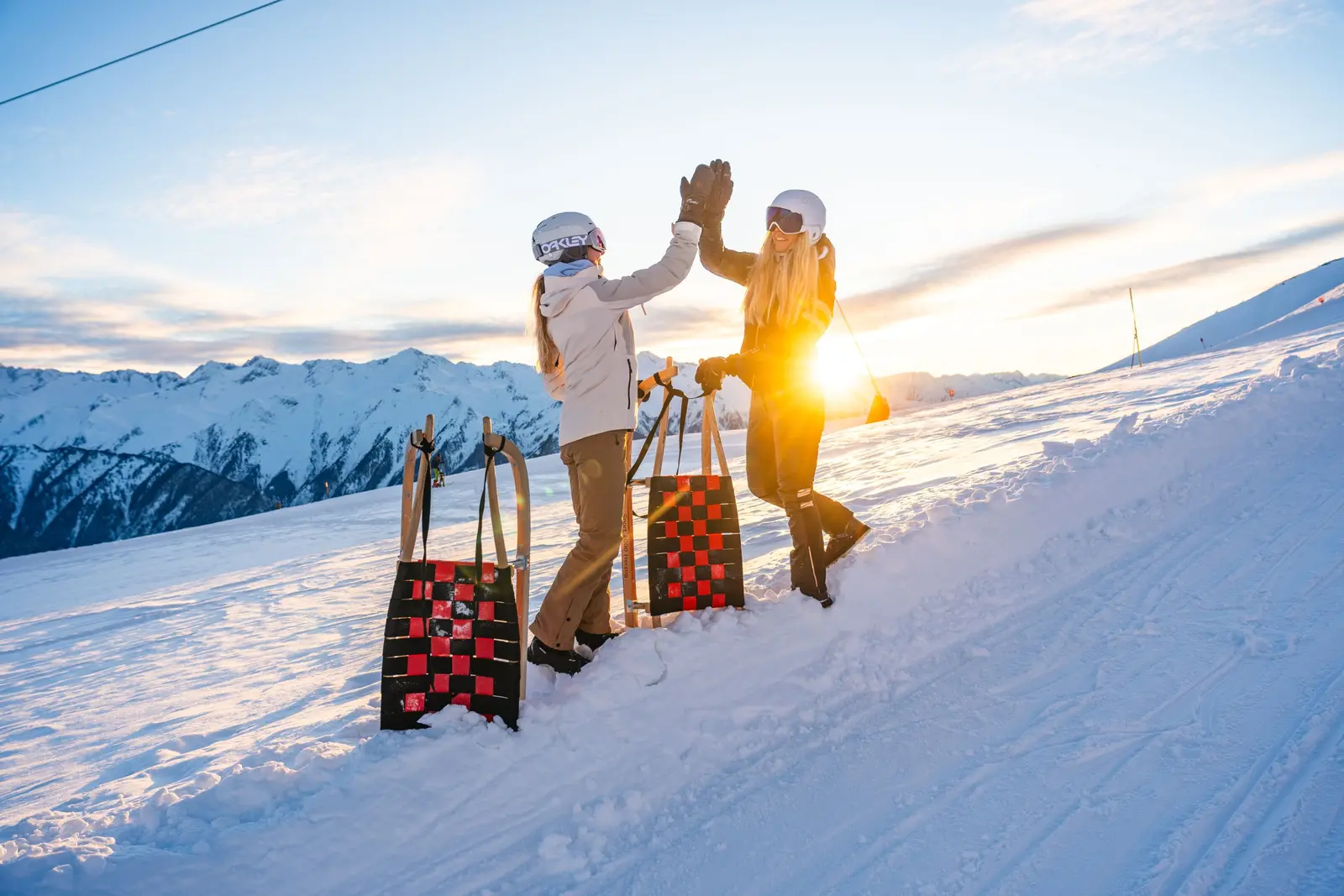
Photo: SalzburgerLand Tourismus · taken at the Wildkogel
The numbers that make the difference
The toboggan run on the Wildkogel between Neukirchen and Bramberg is 14 kilometres long and drops around 1,300 metres — from the top station all the way down to the valley. It is considered the longest floodlit toboggan run in the world, and honestly: the superlatives leave me cold. What counts is the feeling of realising, twenty minutes into the descent, that you're not even halfway.
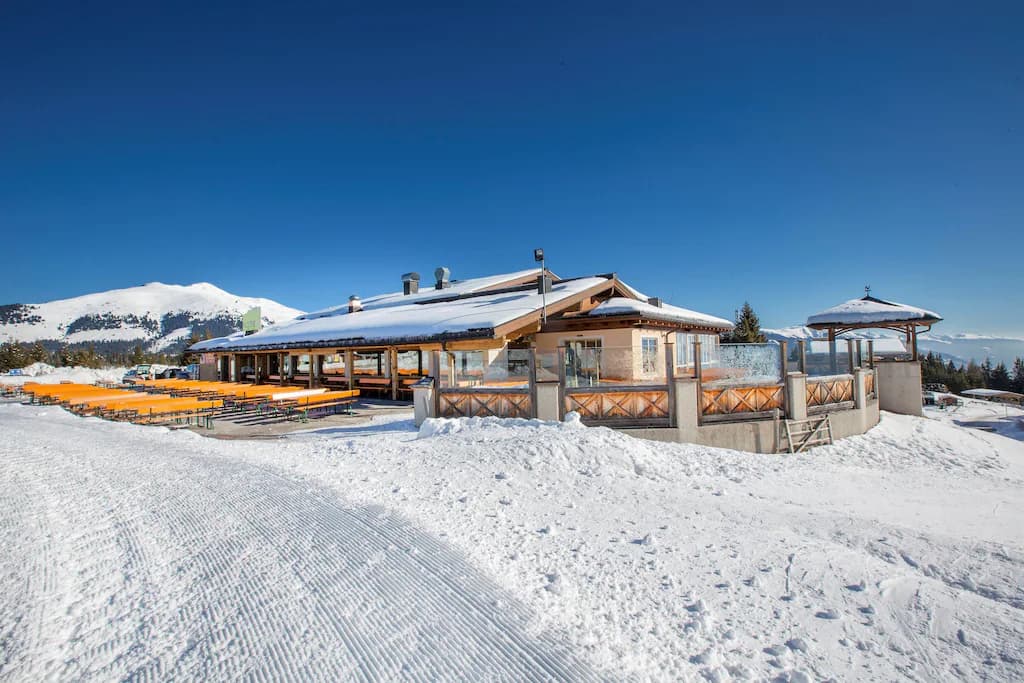
Pure riding time is about 40 minutes if you go straight down. Practically nobody does — and nobody should. The run is wide, there are constant opportunities to stop, and in the lower quarter several very characterful huts sit right beside the track. You don't need to plan them in: you pass them and decide on the spot. Realistically you're out for two hours, and that's how it should be.
You get up there by lift — either the Smaragdbahn from Bramberg or the Wildkogelbahn from Neukirchen.
Why you don't walk up the Wildkogel
This question comes up often, and the answer is unambiguous: you don't. The climb would take three to four hours, and it crosses ski pistes — while tobogganers come down towards you. That is not a good combination. On the Wildkogel, you ride up. Full stop.
It's different at the smaller runs, and those are my tip for anyone who doesn't want to commit a whole day:
Kühnreit in Neukirchen — the walk up takes 15 to 30 minutes, entirely manageable on foot.
Hochkrimml beside the Filzstein platter lift (Krimml) — likewise reachable in a good half hour. And with a bit of luck, the innkeeper hauls the toboggans up by skidoo.
All of these runs are easy to moderate and therefore suit beginners just as well as people who've sat on a toboggan many times.
Night tobogganing: when the lights are actually on
This deserves a close look, because a lot of people rely on half-knowledge. The run on the Wildkogel is floodlit daily until 10 pm — with one exception: Mondays only until 6 pm, because grooming starts after that. So if you happen to plan a late Monday run, you'll be standing in the dark.
The second point, overlooked even more often: floodlit does not mean you can still get up there. The ascent ends at 4:15 pm as a rule; on Fridays it is extended to 6:30 pm depending on weather. So you need to be up there in good time to enjoy the run after dark — that's the one piece of planning you shouldn't leave to chance. (Times shift with the season, so a look at the Wildkogel-Arena's current operating hours before you travel never hurts.)
It does get busy in the evenings, but it stays within reason. The run is long enough for people to spread out.
Equipment: the list that came from experience
Helmet and gloves go without saying. More interesting is what most people forget:
Ski goggles. The snow flies up more than you'd expect. Without goggles you'll ride the last few kilometres squinting.
Boots with a very good sole and waterproofing. On a toboggan you brake and steer with your feet — smooth soles aren't just impractical here, they're dangerous.
Gaiters, or ski trousers that go over the boot. This is the tip guests thank me for most. Without that seal, snow gets into your boots at every braking manoeuvre. After fourteen kilometres that's no longer a minor annoyance but genuinely unpleasant and cold.
Ski clothing rather than jeans. Ride in jeans and you'll arrive soaked. That works too — you'll just know why.
With children: fine at any age, but with one rule
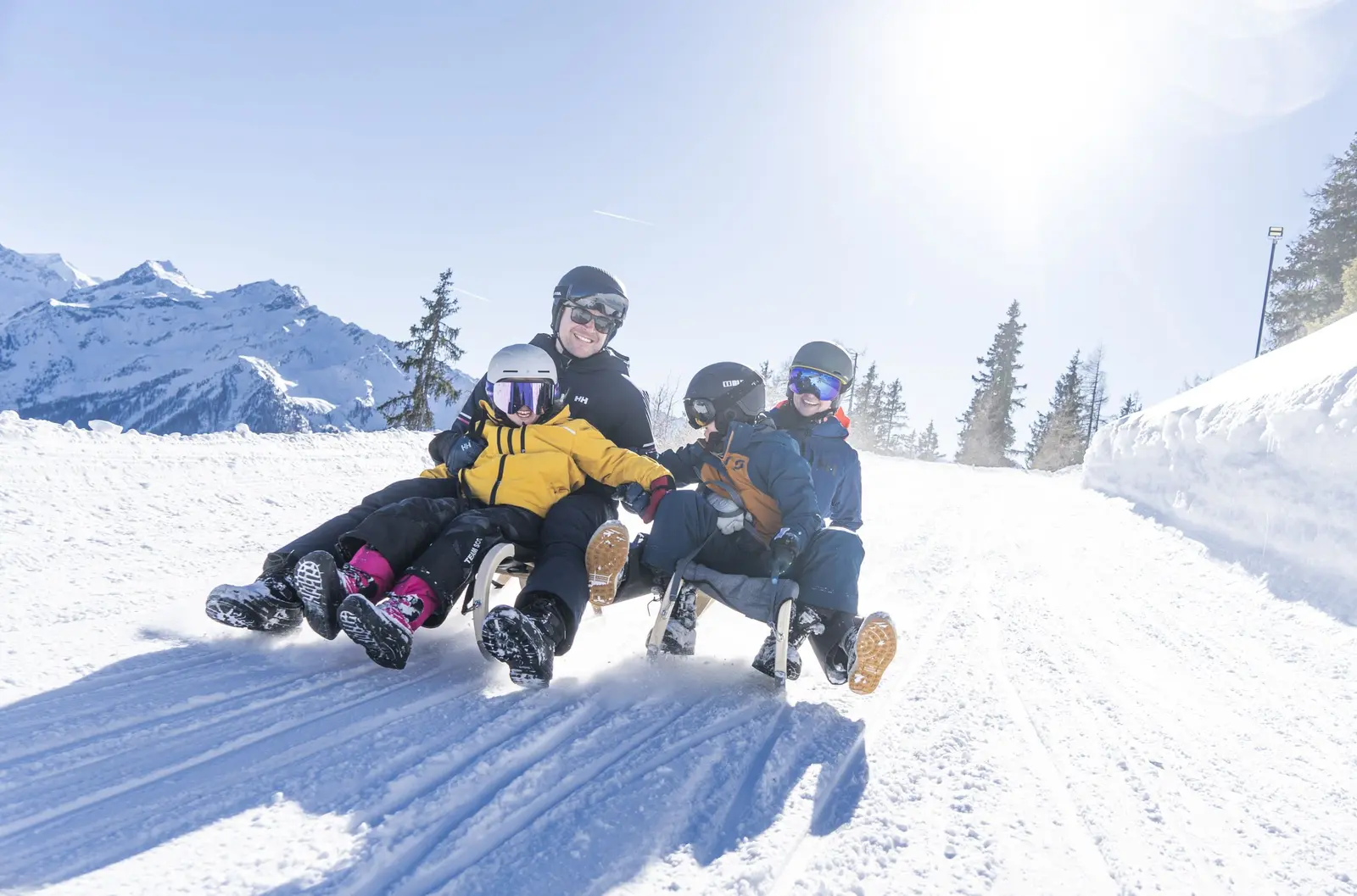
Photo: SalzburgerLand Tourismus · taken at the Wildkogel
Tobogganing works at essentially any age, which is what makes it a family activity. Small children shouldn't ride alone while they're still unsteady, though. And then there's the one point I pass on to every guest with children, ever since I learned how fast it can happen.
My daughter Tabea was around eight. We were on the descent, it was going well, and at one place the toboggan run crosses a ski piste. That's exactly where she suddenly turned left — onto the piste — and couldn't brake. I caught her by the collar at the last moment and pulled her off the toboggan. The toboggan itself shot two hundred metres down the piste unmanned, over the edge and into a tree.
Nothing happened. Not to her, not to any skier. But we were very lucky, and since then I know: the run is fundamentally safe — for everyone. The mistake doesn't happen on the run itself, but at the crossings and whenever somebody overestimates themselves. One eye on the children, one eye on yourself, and particular attention where the toboggan track and the piste meet.
The honest counter-tip
The most common mistakes are quickly listed: overestimating yourself and the wrong footwear. Both connect to the thing you can't tell by looking at this run — it is long. Fourteen kilometres of constant braking and steering go into your feet and thighs, noticeably. Anyone who tires halfway down starts making mistakes.
So: take a break, even if you feel fine. The huts in the lower section aren't only there for pleasure.
When conditions are genuinely good
My clear recommendation: in the morning. The later the day, the bigger the moguls that build up in the track from all the toboggans. Mornings are quieter and the run is still in good shape.
As for months, it depends less on the calendar than on the snow:
Fresh snow is the most pleasant — not least because a fall lands softly.
Hard, icy conditions I would avoid. That's demanding, and you quickly lose control of the toboggan.
March and April are a gamble. By then it's usually too warm and the snow too soft, and the descent becomes hard work rather than relaxing.
Hiring a toboggan
There are numerous hire points in Neukirchen and Bramberg — easiest directly at the valley station. Budget roughly 12 to 20 euros per toboggan for the day; exact prices vary by provider and season.
On top of that comes the ride up. A single ascent currently costs around 23 euros for adults and 11.50 euros for children, a day ticket about 56 and 28 euros respectively. If you want to go up several times — and you will, once you've caught the bug — the day ticket is the better deal.
If you're skiing anyway, you may pay nothing extra: a valid Wildkogel-Arena ski pass covers the ascent to the toboggan run until 4:15 pm. And because the Zillertal Arena pass is also valid at the Wildkogel from two days onwards, you can combine a morning on the slopes with an afternoon toboggan descent — on one pass.
The boundary is sharp: the evening ascent after 4:15 pm is not included in the ski pass. That requires the toboggan ticket. The descent itself may fall into darkness, since the floodlights run until 10 pm — you simply need to be up there in time.
Where to stay if tobogganing is the plan
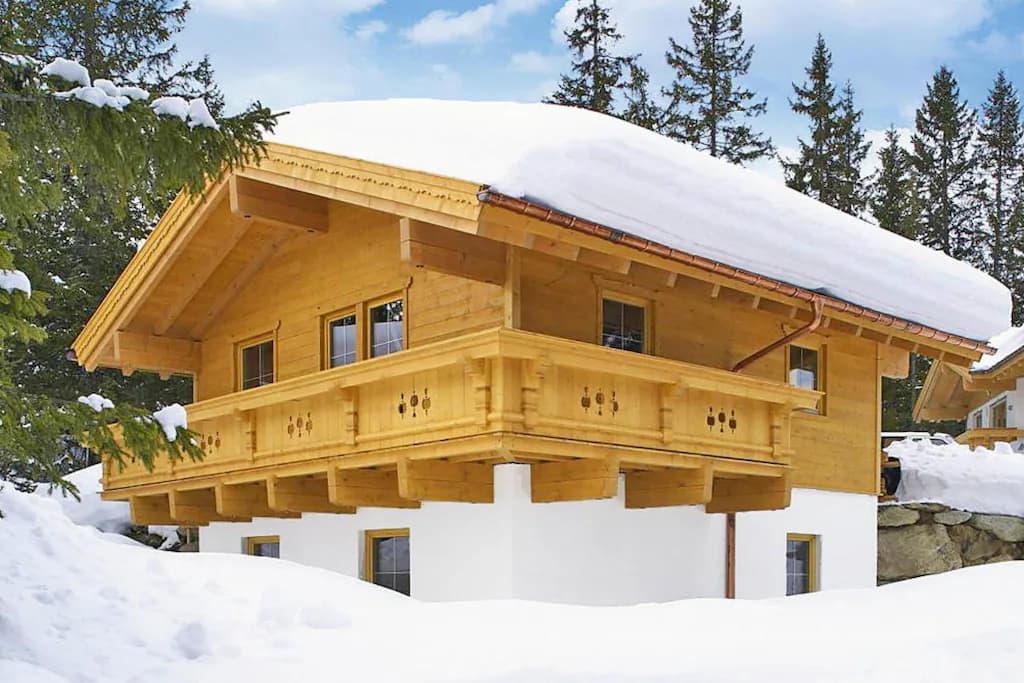
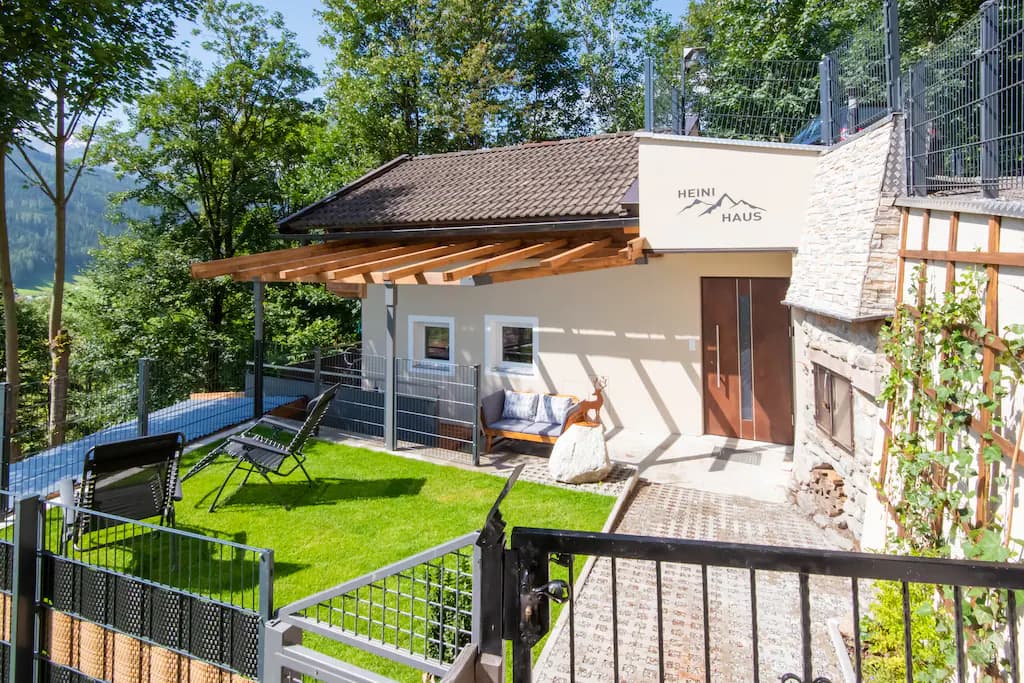
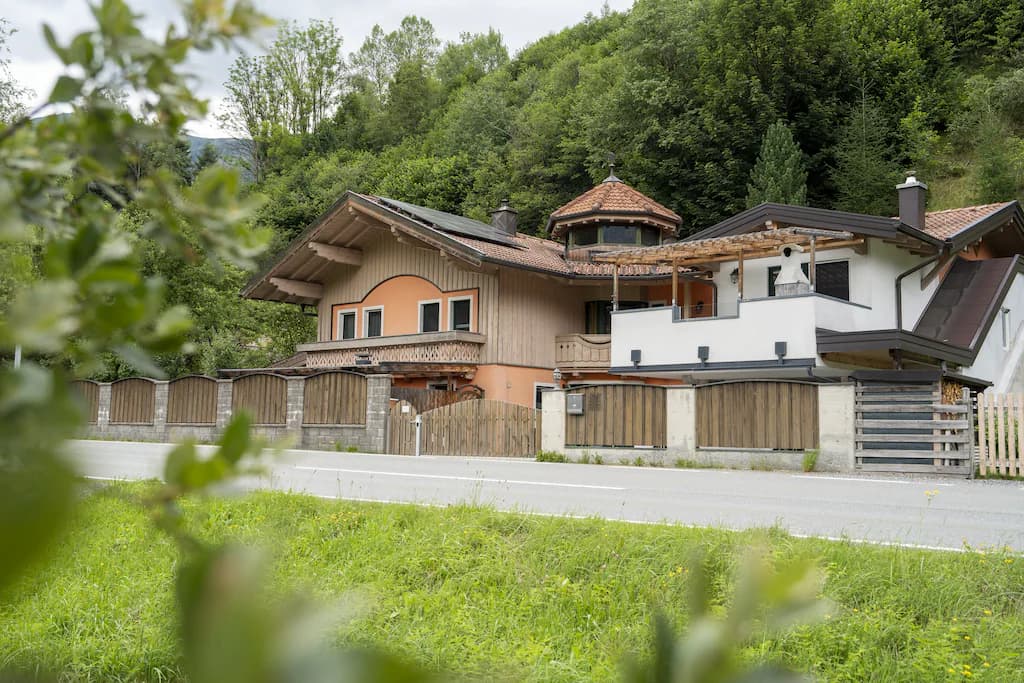
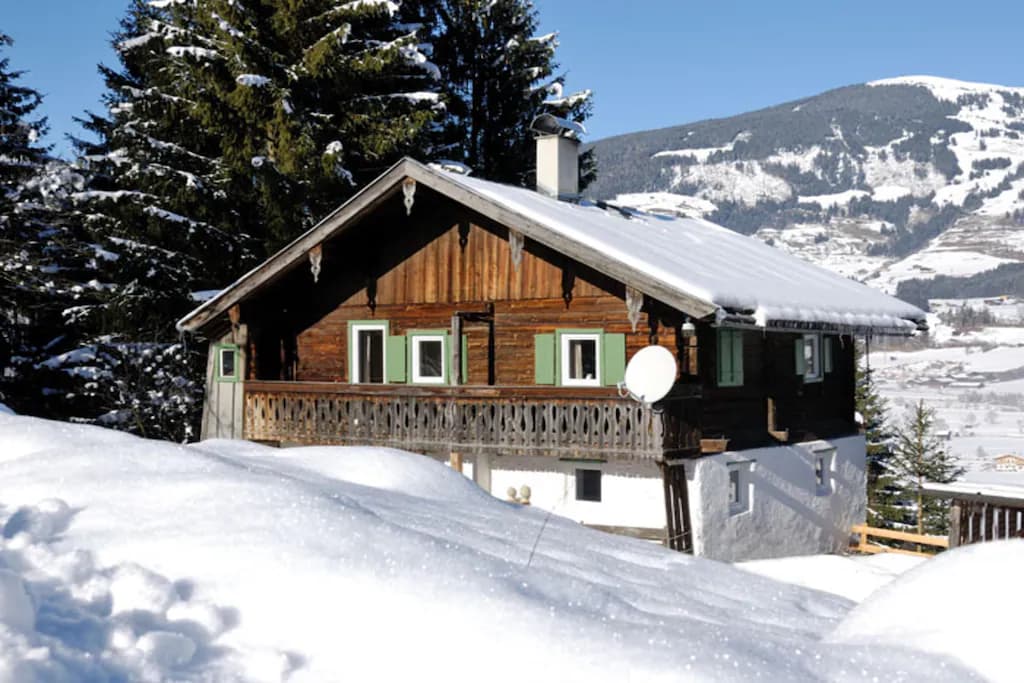
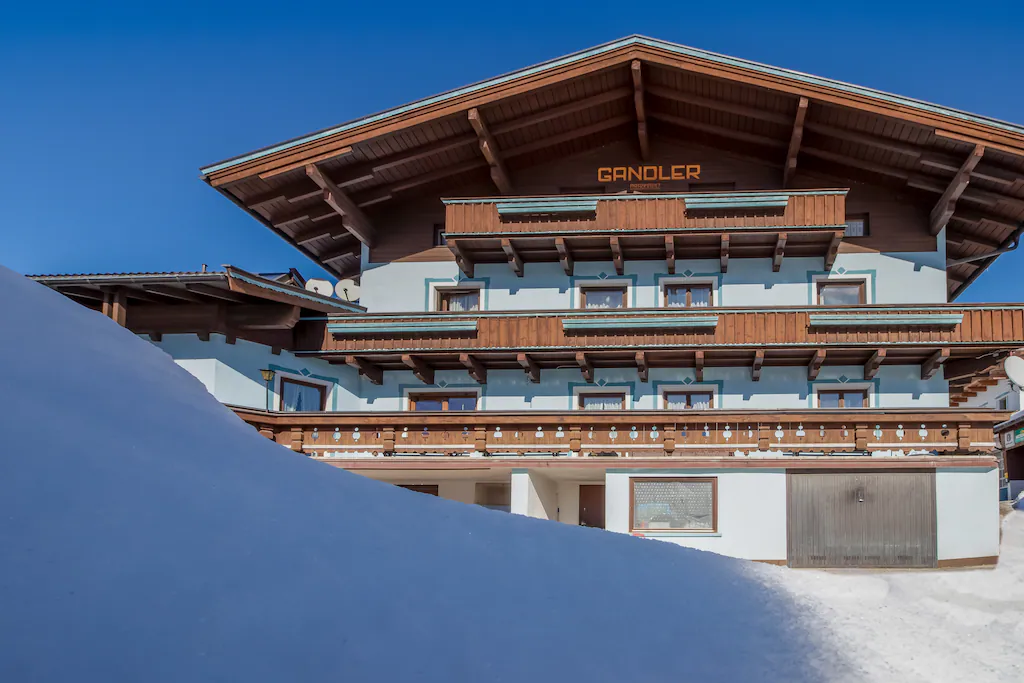
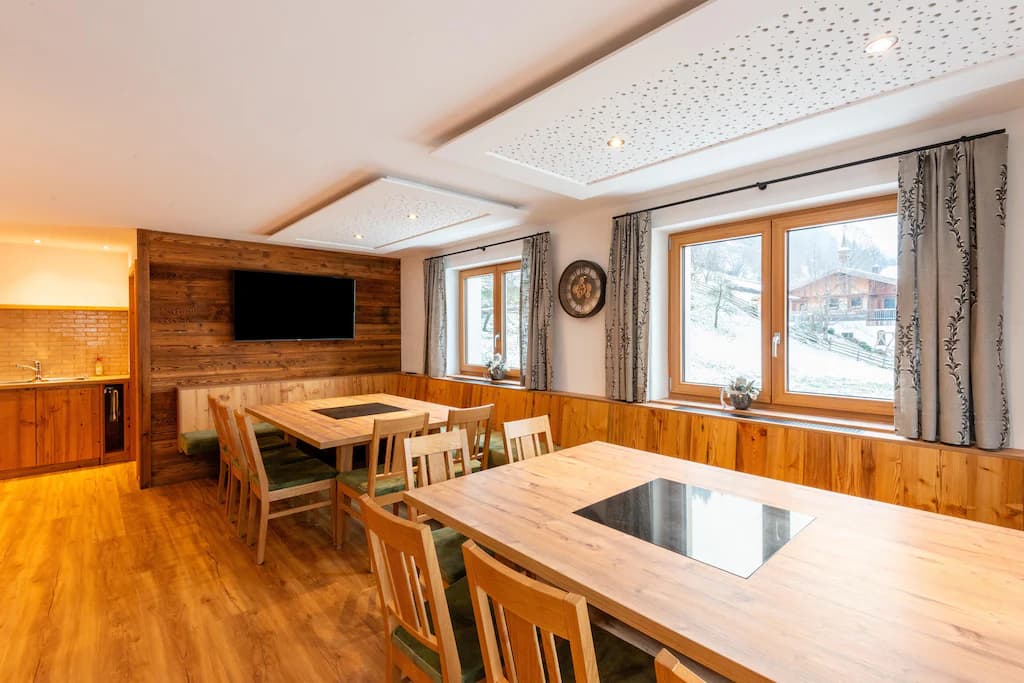
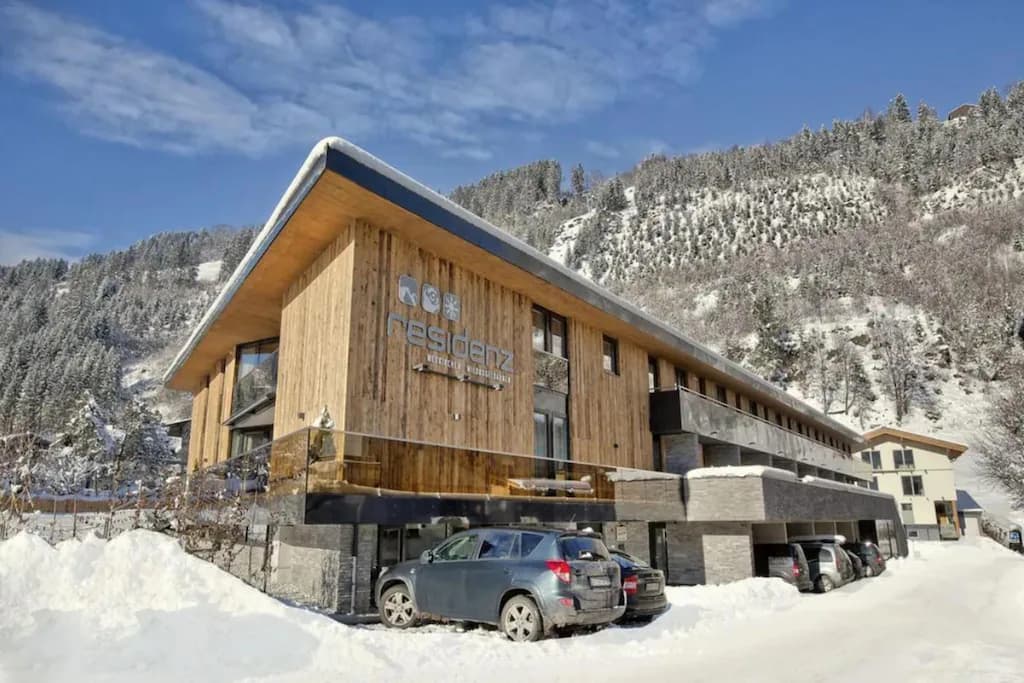
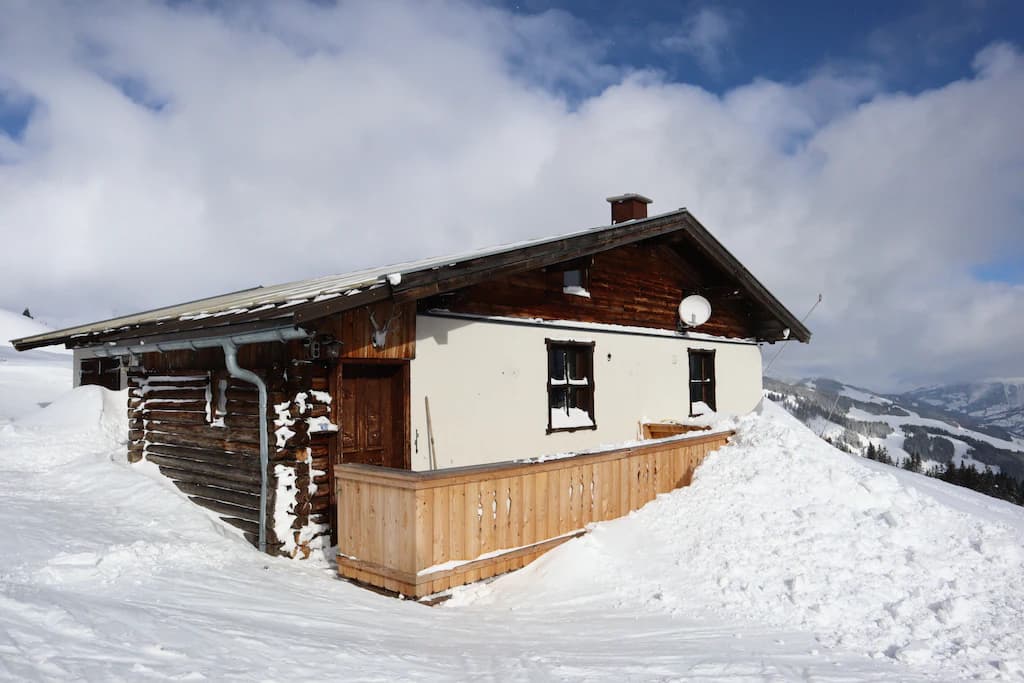
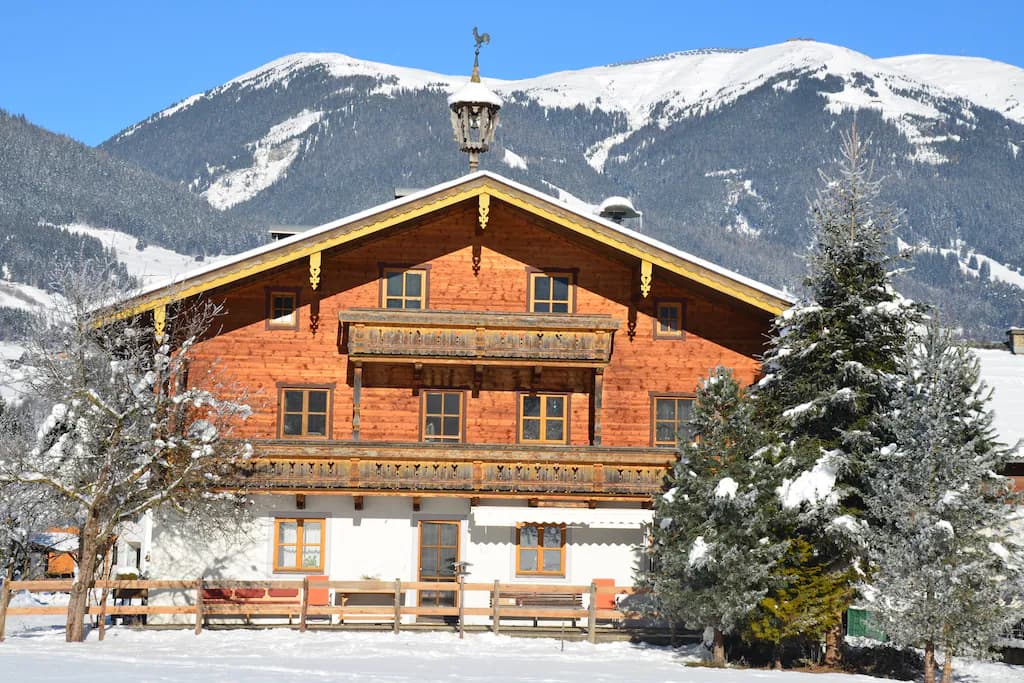
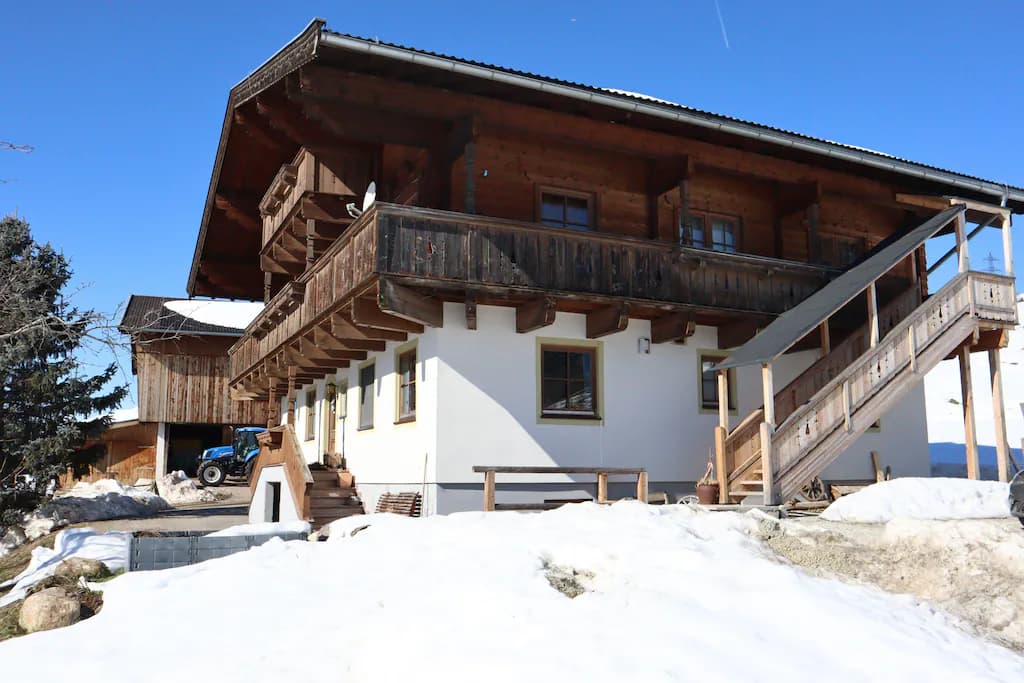
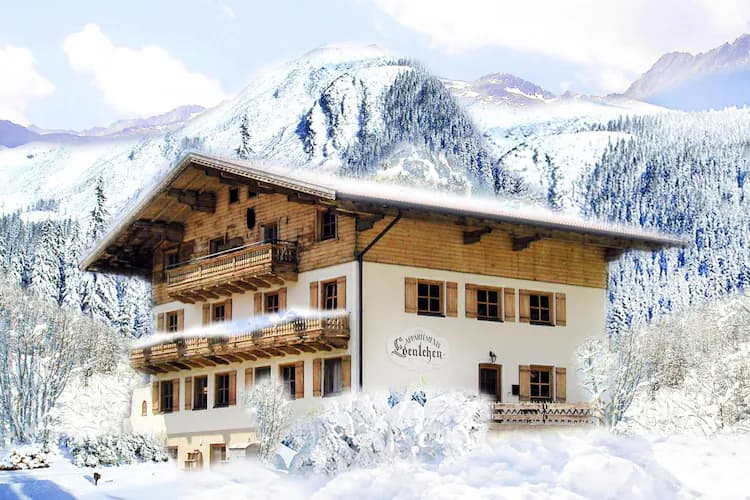
The practical advantage of our region: the valley stations sit in the middle of the villages. If you take a holiday apartment in Neukirchen or Bramberg, you walk to the lift in the evening and walk back after the descent — without getting into the car again. And if you prefer the smaller runs, you're a few minutes from the Filzstein from Krimml.