Ski touring in the Oberpinzgau: the lap before work and the tour for a whole day
Ski touring has a reputation for being something for specialists — avalanche gear, route planning, risk. That is true for part of it. For the other part I need nothing more than skins, an hour of time and the car park by the beginners' lift.
I do both, and have done for years, and I believe it is exactly this split that explains why so many people here take it up. You don't have to go off-piste to get the feeling you're doing it for. You can simply walk up a slope before the lifts start running.
Photo: Svíčková / Wikimedia Commons, CC BY-SA 3.0
My lap: Filzstein Speedy up to the Plattenkogel
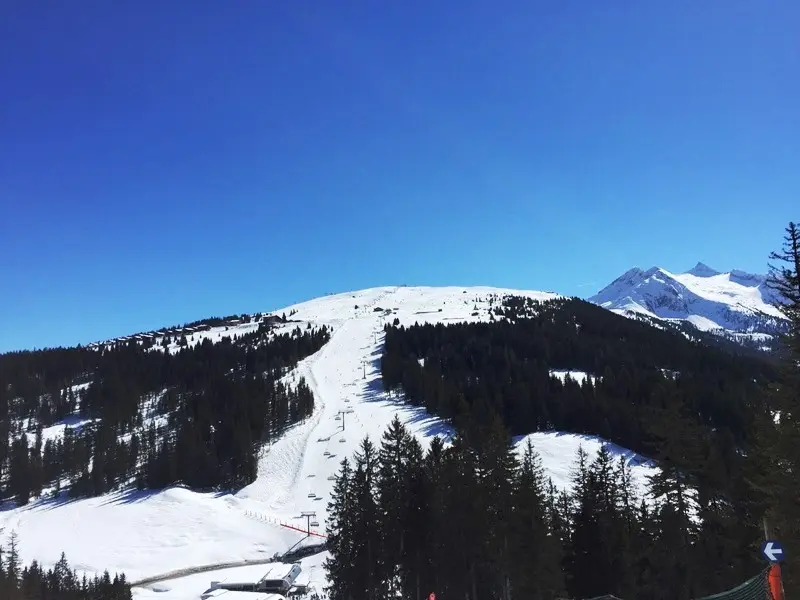
This is the tour I do most often, and it is also the first one I recommend to guests. It runs up the piste from the Filzstein Speedy to the Plattenkogel in Hochkrimml — no open terrain, no avalanche question, no weather problem.
You park directly at the Filzstein beginners' lift and set off from there. Anyone in decent shape is at the top after 30 minutes. I take just under 60, and that is perfectly fine — it isn't a race.
If it turns into a morning lap, I start around eight o'clock. And then comes the moment I actually do it for: you arrive at the top, you've made it, and all around you stands a 360-degree view of the three-thousanders. That's all there is to it. It's entirely enough.
What makes this lap so dependable: it works in bad weather too. Snowfall, overcast, hazy — on the groomed piste none of that matters. Which is exactly why it suits beginners and the out-of-practice. A bit of base fitness, that's it.
If you prefer the afternoon: I set off after 3 pm and make sure I'm back down before 5 pm. Two reasons. First, it gets dark. Second, that is when the piste crew comes out, and you do not want to meet them.
After the descent the stop for food is conveniently on the way — the ski area has plenty of huts, and the BergGeistAlm sits about 200 metres below the summit. More on that in the alpine skiing article, which covers the area and the baked potato in more detail.
Touring on the piste: allowed, but not at every hour
Because the question comes up often: touring on the pistes is permitted here. So you may walk up with skins without a guilty conscience.
The restriction applies to certain edge hours — when the grooming machines are working. That isn't red tape, it is simply dangerous: a snow groomer with a winch is not always visible in time in the dark, and the cable even less so. Hence the 5 pm limit mentioned above.
The Ronachgeier: the tour for a whole morning
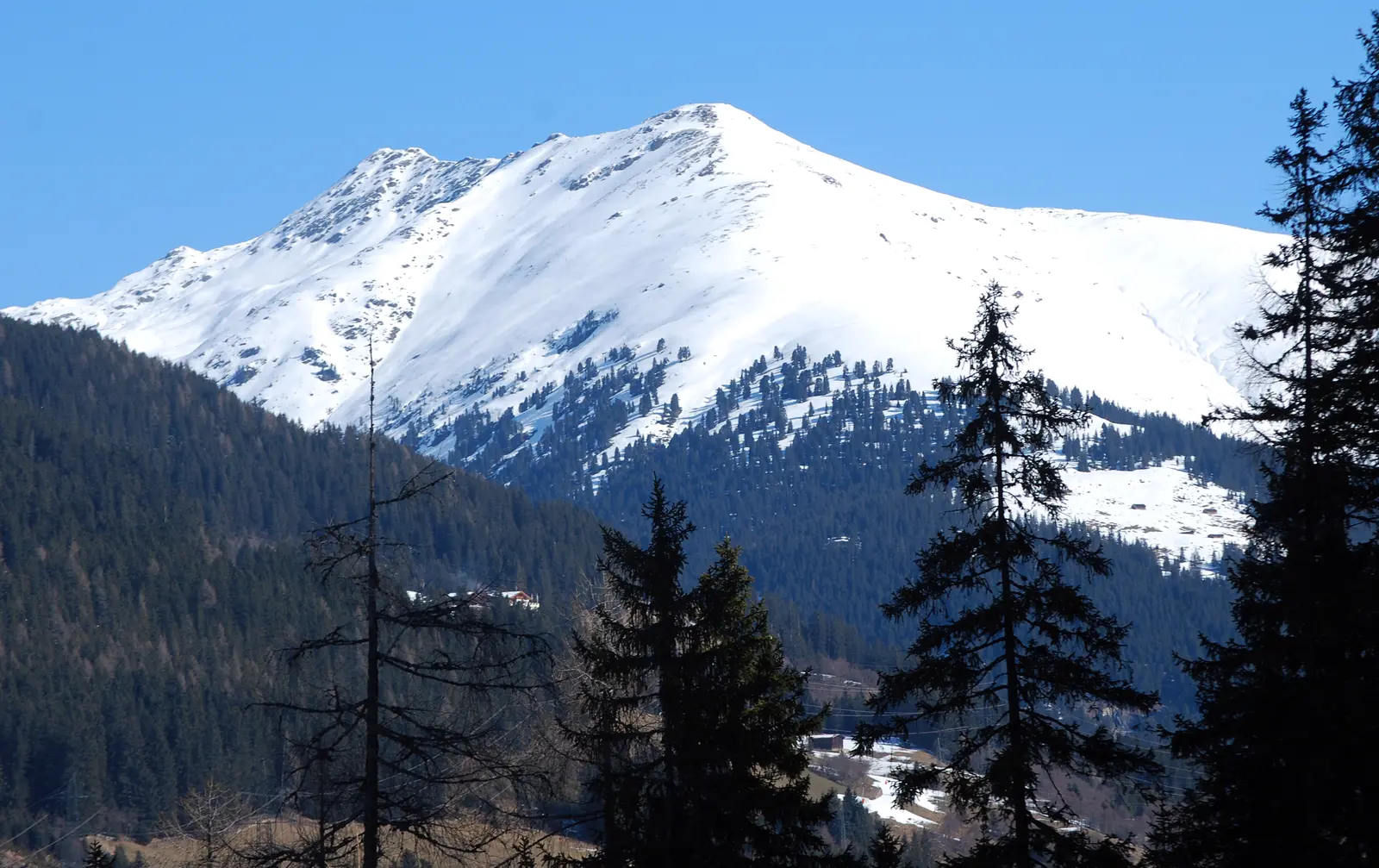
If it is to be a proper tour, the Ronachgeier above Wald im Pinzgau is my recommendation. It counts as easy, and it is — but it is a different order of magnitude from the Plattenkogel lap.
The numbers: start at Gasthof Ronach at around 1,450 metres, summit at 2,236 metres. That makes roughly 800 metres of ascent and about two hours going up. The route leads through open woodland and across broad slopes — nothing exposed, nothing technical.
You park at Gasthof Ronach, and it costs nothing. A detail worth mentioning in a region where parking charges keep spreading.
At the top you stand looking at the Großvenediger and the Hohe Tauern — and that is the real reward.
The Baumgartgeier (2,392 m) lies about another half hour on from the Ronachgeier. But it is optional and not an automatic part of the tour. Anyone who adds it does so deliberately; anyone who turns around at the Ronachgeier has missed nothing.
One more thing: there is no mountain hut on the way. If you want to stop, it's downstairs at Gasthof Ronach. So pack a flask.
Photo: Schlipstraeger / Wikimedia Commons, CC BY-SA 4.0
The Großvenediger: the big one, and what it requires
The Großvenediger is the tour guests ask about most, and it is rightly a classic — in spring, via the Obersulzbach valley and the Kürsinger Hütte.
But it is not a step up from the Ronachgeier, it is something categorically different. What it requires: high-alpine experience and real ski touring experience. Glaciers, crevasse rescue, rope work — you don't pick that up along the way.
My recommendation if even one question mark remains: go with a mountain guide. That is not a weakness, it is the difference between a magnificent tour and a problem.
If you would rather get to know the area in summer first — the Obersulzbach valley and the Venediger group are covered at length in the national park article and under hiking.
Avalanches: what gets underestimated here
This is the part where I don't want to soften anything.
What guests here underestimate most often: it frequently doesn't look as dangerous as it actually is. A slope that seems friendly and easy to read can be exactly the one that goes. Appearance is of almost no help in judging it.
So, without qualification: off-piste only with genuine experience and complete avalanche equipment — transceiver, probe, shovel, and the practice to use them. And check the current forecast at lawine.at before every tour.
The pleasant side effect of the Plattenkogel lap: on the piste the question doesn't arise at all. That is one of the reasons I recommend it so often.
When the season works
That depends less on the calendar than on the snow. Two rules of thumb from experience:
The Plattenkogel usually works from December to March — given reasonable snow cover.
The Ronachgeier needs good snow cover and often gets tricky from March onwards.
The reason for the difference is the aspect: the Ronachgeier faces south, into the sun. What is pleasant in midwinter — walking in sunshine instead of shade — becomes the problem in spring. Direct sun works on the snow, and then the descent is no longer what you climbed up for.
Renting equipment
Straightforward: touring equipment is available from the local sports shops. That applies to Krimml, Neukirchen and Mittersill alike. So if you just want to find out whether touring is for you, there is no need to buy kit first.
Who is it not for?
Honest answer: almost nobody. If you fancy it, you can do it.
What matters is how you start. I wouldn't advise anyone to begin with a backcountry tour — start with a simple tour next to or on the piste. That is precisely what the Plattenkogel lap is for. If the appetite is still there afterwards, the rest follows by itself.
What it doesn't take: special technique, youth, or particular fitness. What it does take: base fitness and a willingness to walk slowly.
Where to stay if touring is the plan
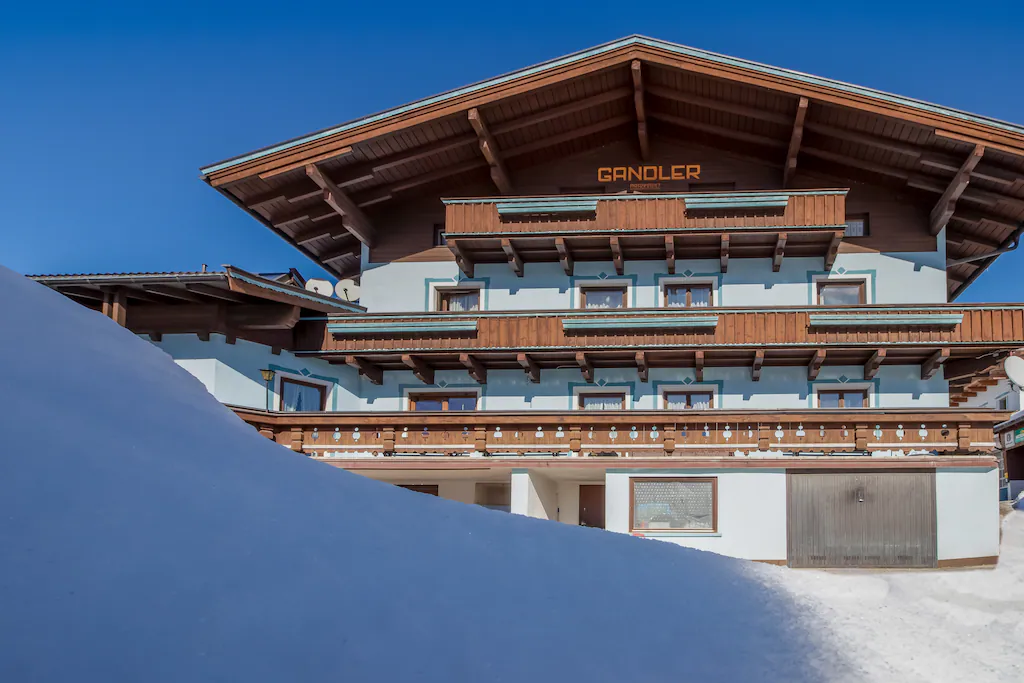
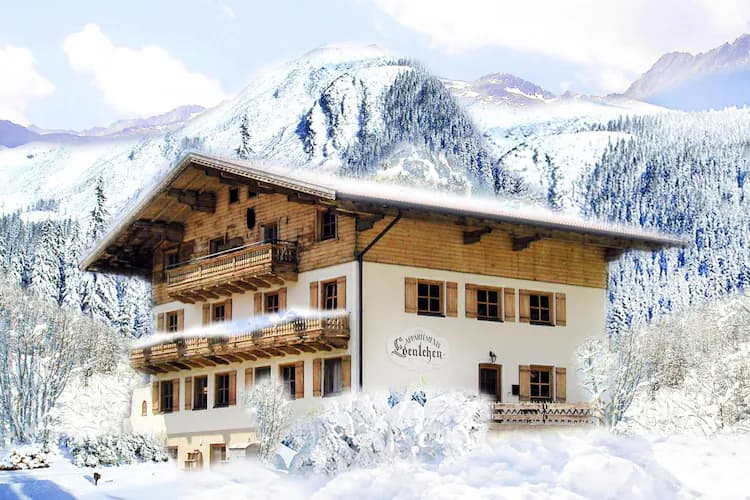
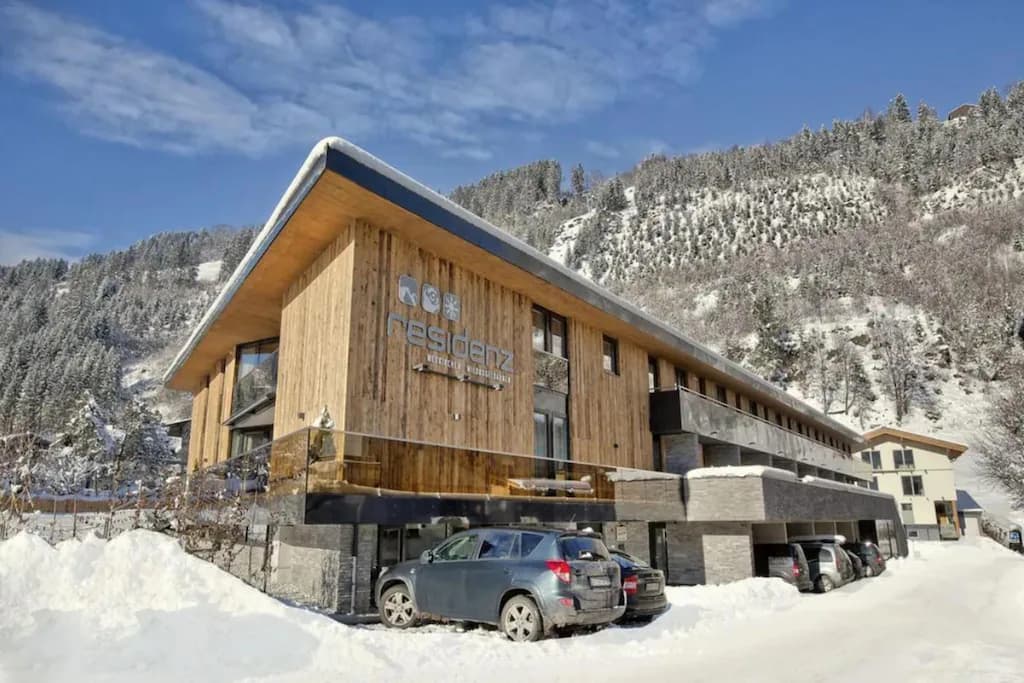
Being close to the start is practical — on a morning lap, every minute not spent in the car counts.
For the Plattenkogel lap, Krimml is the obvious base; the Filzstein is a few minutes away. For the Ronachgeier, Wald im Pinzgau is the shortest way to the start.
And because a touring day is rarely the whole holiday: in winter the same region is also a ski area and, with the Wildkogel run, has one of the longest floodlit toboggan runs anywhere. In summer it turns into hiking country.